What is Thai stir-fry
Learn what Thai stir-fry means, why the word pad matters, how wok cooking works, and where tofu stir-fry fits into a Thai meal.
Contents
- The meaning of pad in Thai food
- What a wok and high heat do
- The parts of a Thai stir-fry sauce
- Stir-fried vegetables and their timing
- How tofu stir-fry works
- A simple order for building the dish
- Sauces and tools worth having ready
- Thai stir-fry questions answered
- What does the Thai word pad mean?
- What is tofu stir fry?
- How is Thai stir-fry different from other stir-frying?
- Do I need a wok for Thai stir-frying?
- Why does my stir-fry turn out watery?
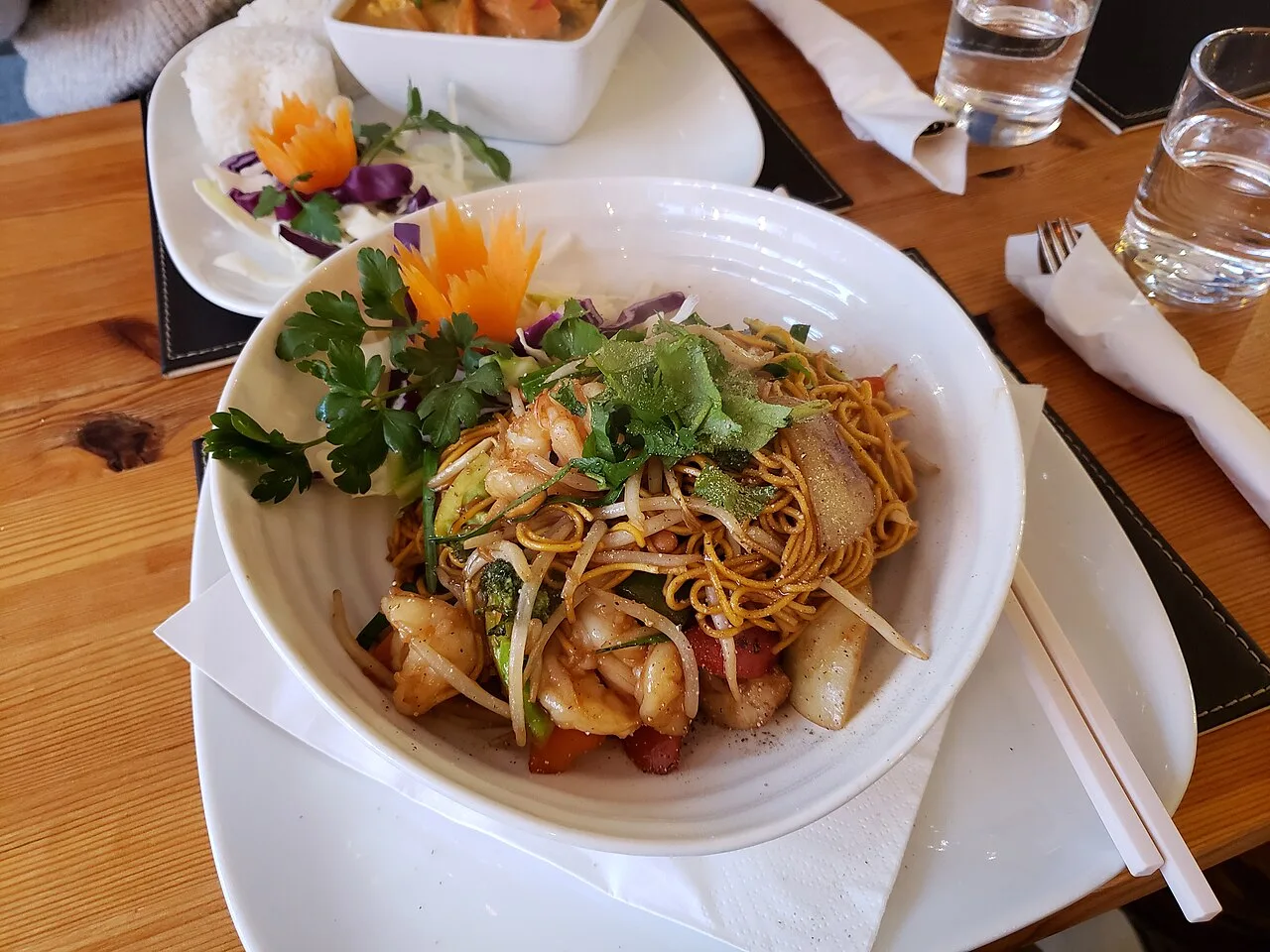
Thai stir-fry is food cooked fast in a very hot wok with a little oil, a protein or vegetable, and a Thai sauce. The Thai word pad means stir-fried, so the name of a dish tells you the cooking method. A tofu stir-fry follows the same idea, with firm tofu standing in for meat.
- Pad is the Thai word for stir-fried, so pad kra pao is stir-fried holy basil with meat.
- High heat and quick movement are what separate Thai stir-frying from slow cooking.
- A stir-fry sauce balances salty, sweet, and sour tastes in a small amount of liquid.
- Cooking happens in stages, so each ingredient keeps its own texture.
- Firm tofu needs pressing and searing before it joins the wok so it holds together.
The meaning of pad in Thai food
The word pad in Thai food means stir-fried, which is why a dish called pad something is cooked in a wok over high heat. Thai stir-fry names often follow a pattern: pad, then the main ingredient, then the flavoring. This simple naming system lets a menu tell you the method before you read the list of ingredients.
Pad kra pao is the clearest example of this pattern, and its name means stir-fried holy basil. The dish pairs ground or sliced meat with holy basil leaves, garlic, and chilies. A cook who knows the meaning of pad can read the name and picture the pan, the flame, and the final toss of leaves.
Not every stir-fried dish in Thai cuisine is named with pad, so the word is a guide rather than a rule. Some dry curries and vegetable plates are also stirred in a hot pan. Still, hearing pad is the fastest way to recognize a Thai stir-fry definition.
What a wok and high heat do
High heat is the engine of stir-frying in a wok, because a hot surface sears food quickly instead of letting it steam. A round-bottomed wok holds a small pool of oil at the middle and throws heat up the sides. The shape lets you push cooked pieces up the wall while the next batch hits the hottest spot.
Stir-frying technique depends on keeping food moving, so it touches the metal and releases moisture fast. Too much food in the pan drops the temperature and the food starts to stew. A cook adds ingredients in order of how long each one needs and keeps the pan crowded only briefly.
A domestic stove can still stir-fry well when the wok is preheated properly and the batches are small. Splashing a drop of water into a hot, dry wok tells you it is ready. Moisture should sizzle away at once rather than sit and bubble.
The parts of a Thai stir-fry sauce
A Thai stir-fry sauce is a small amount of liquid that carries salt, sweetness, and acidity into the pan. Fish sauce or soy sauce supplies the salty base, while sugar rounds the edge and lime or tamarind adds brightness. The sauce goes in near the end so it coats the food instead of boiling off.
Oyster sauce and thin soy sauce bring body and color to many stir-fries, and dark soy adds depth to noodles. A cook tastes the sauce before it goes in and adjusts the balance, because fish sauces vary in strength. Liquid in a stir-fry is measured in spoons, not cups, since the goal is a glaze rather than a soup.
Aromatics go into the oil before the sauce does, because garlic, chilies, and shallots need a moment to release flavor. The oil should be hot but not smoking when the aromatics enter the wok. Burnt garlic turns bitter and spoils the whole plate.
Stir-fried vegetables and their timing
Stir-fried vegetables in Thai cooking keep a crisp bite, and the timing of each vegetable decides that texture. Dense pieces such as carrot or bamboo shoot go in first, and leafy greens such as morning glory go in last. A small splash of water can help a firm vegetable cook through without scorching it.
Vegetables release water as they cook, and that water cools the wok and dilutes the sauce. Cooking them in a hot pan in small batches keeps the surface dry enough to brown. A plate of vegetables should look glossy from the sauce, not wet at the bottom.
Thai stir-fries often finish with a handful of fresh herbs or a squeeze of lime off the heat. Holy basil, Thai basil, and cilantro bring fragrance that heat would otherwise destroy. Adding them at the end keeps the plate bright and the aroma sharp.
How tofu stir-fry works
A tofu stir-fry in Thai style uses firm or extra-firm tofu so the cubes hold their shape in the wok. Soft tofu breaks apart under a spatula and suits soups better than stir-frying. Firm tofu also takes on sauce well because its surface browns and grips the glaze.
Pressing tofu removes excess water, and dry tofu browns instead of steaming when it meets the heat. A gentle sear on several sides builds a crust before the sauce goes in. Once the tofu is golden, a cook moves it to the side and stir-fries the aromatics in the open space.
Tofu stir-fry pairs with the same flavors as meat versions, including garlic, chili, basil, and soy sauce. A firm, dry cube can be tossed back into the pan at the end without falling apart. This makes tofu a straightforward swap in many pad dishes.
A simple order for building the dish
Building a Thai stir-fry in the right order keeps each ingredient at its proper texture. The wok goes on the heat first, then the oil, then the aromatics that need a few seconds. A cook prepares everything before the pan gets hot, because there is no pause once cooking starts.
Protein goes in after the aromatics, and it should be spread out and left briefly to brown. Vegetables follow in order of density, with leafy greens near the end. The sauce enters last, and the toss coats everything before the herbs finish the plate.
A cook moves the food constantly but not frantically, using the wok's curve to flip and fold. Resting food against the hot metal for a moment gives it color that constant tossing would prevent. The whole process moves fast, which is why preparation happens first.
- Heat the wok until a water drop sizzles and vanishes.
- Add oil, then garlic, chili, or shallot for a few seconds.
- Sear the protein in a single layer before stirring it.
- Add firm vegetables first and leafy ones last.
- Pour in the sauce and toss until it glazes the food.
- Finish off the heat with herbs or a squeeze of lime.
Sauces and tools worth having ready
A stir-fry cook keeps a short set of sauces within reach, because the cooking happens too fast for pantry trips. Fish sauce, oyster sauce, soy sauce, and sugar cover the salty and sweet side of most dishes. A small bowl of each, portioned out beforehand, lets you add without measuring mid-pan.
A wok with a long handle and a wok spatula are the core tools for stir-frying in a wok. A flat metal spatula scrapes the curve better than a soft spoon. A small bowl for the sauce and a plate for the finished food complete the setup.
A stable burner and a wok that sits level matter more than costly equipment. Keep a towel and a clear counter space near the stove. Hot oil and fast movement leave little room for clutter.
Thai stir-fry questions answered
What does the Thai word pad mean?
The Thai word pad means stir-fried, so a dish with pad in its name is cooked quickly in a hot wok. Pad kra pao, for example, is stir-fried holy basil with meat. Knowing this word helps you read a Thai menu.
What is tofu stir fry?
A tofu stir fry is a wok dish in which firm tofu takes the place of meat and cooks with aromatics, vegetables, and a Thai sauce. Pressing and searing the tofu first gives it a firm crust that holds the glaze. The result follows the same method as any other Thai stir-fry.
How is Thai stir-fry different from other stir-frying?
Thai stir-fry leans on fish sauce, garlic, chilies, and fresh herbs such as holy basil, which give it a sharp and fragrant character. The sauce is small and balanced rather than heavy. High heat and quick tossing are the core of the method, as in other wok traditions.
Do I need a wok for Thai stir-frying?
A wok helps, but a wide, heavy skillet can work when it is properly preheated and not overloaded. The curved shape of a wok makes tossing easier and gives more hot surface. The heat and the small batches matter more than the pan alone.
Why does my stir-fry turn out watery?
A watery stir-fry usually means the pan was too cool or too full, so the food steamed instead of searing. Wet ingredients also add moisture, which is why tofu and vegetables benefit from drying first. A hotter wok and smaller batches fix most of the problem.




