What galangal is
Learn what galangal is, how it differs from ginger and lemongrass, what fresh galangal tastes like, and how to use this Thai rhizome in the kitchen.
Contents
- What galangal is in plain terms
- How fresh galangal looks and feels
- The flavor of galangal
- Galangal versus ginger
- Galangal versus lemongrass
- Is galangal edible
- A wrong substitute for galangal
- Ways to use galangal in the kitchen
- Questions about galangal
- Is galangal edible?
- Is galangal lemongrass?
- What is fresh galangal?
- What is a wrong substitute for galangal?
- How does galangal compare with ginger?
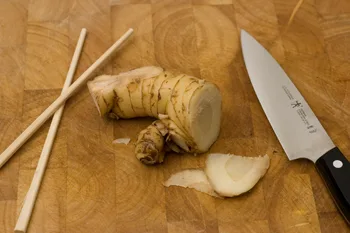
Galangal is a rhizome, an underground stem, used as an aromatic ingredient in Thai cooking. It belongs to the ginger family and brings a sharp, citrusy, pine-like flavor that ginger does not match. Fresh galangal looks like a knobby ginger root with paler skin and pinkish shoots.
- Galangal is an edible rhizome in the ginger family, known as kha in Thai cooking.
- Its flavor is citrusy, peppery and pine-like, sharper than ginger and not as sweet.
- Galangal is not lemongrass, though the two often appear together in Thai soups.
- Slices of fresh galangal are tough and fibrous, so they flavor a dish more than they get eaten.
- Ginger is the closest everyday stand-in, but it changes the flavor of the dish.
What galangal is in plain terms
Galangal is the thick, branched underground stem of a plant in the ginger family, Zingiberaceae. The plant grows leafy shoots above ground while the aromatic rhizome develops below the soil. Cooks treat this rhizome as a seasoning rather than as a vegetable.
The main species in Thai kitchens is Alpinia galanga, called kha in Thai. A related type, lesser galangal, is smaller and more pungent. Both share the family trait of a warm, aromatic bite that comes from oils held inside the rhizome.
Galangal is one of the core Thai aromatics, alongside lemongrass, kaffir lime leaves and garlic. These ingredients build the base flavor of soups and curries. Knowing what galangal is helps you read a Thai recipe and picture the finished taste.
How fresh galangal looks and feels
Fresh galangal has pale, smooth skin with a faint pink or cream tone on new shoots. The rhizome is knobby and branched, with a firm body that feels heavy for its size. Cut into it and the flesh is pale and fibrous, threaded with thin lines.
Buying fresh galangal means choosing pieces that are firm and free of soft spots or mold. A piece that feels light or spongy has lost moisture and much of its aroma. Store it in a cool, dry place or wrap it and keep it cold for a short time.
Fresh galangal is what most Thai recipes expect when they call for the ingredient. Dried slices and powder exist, but they lose the bright edge of the fresh root. When you can find the fresh rhizome, the flavor comes through more clearly in the pot.
The flavor of galangal
Galangal flavor is sharp, citrusy and slightly piney, with a peppery warmth behind it. The taste arrives quickly and fades cleanly, leaving a fresh, almost soapy note. It carries none of the sweetness that ginger can have.
The citrus note in galangal does not come from fruit, but from aromatic oils inside the rhizome. Cooking releases those oils into the liquid or fat of the dish. Prawn heads, coconut milk and fish sauce each pick up that sharp aroma in different ways.
Some cooks describe the taste as a cross between ginger and black pepper with a hint of lime peel. Young galangal is milder, while older pieces turn more pungent and woody. A quick sniff of a cut end tells you more than any description.
Galangal versus ginger
Thai galangal versus ginger comes down to shape, skin and flavor. Ginger has a thinner, lighter skin and a smoother, denser body. Galangal is harder, more branched and usually paler, with pinkish tips on growing shoots.
Ginger tastes warm and slightly sweet, while galangal tastes sharper, peppery and more citrusy. Ginger softens and blends into a dish, and galangal stays assertive. That difference matters when a recipe depends on the clean, pine-like top note.
Ginger is the practical stand-in when galangal is missing, but the dish will taste sweeter and softer. A cook making a Thai soup wants the sharper note, and ginger alone will not deliver it. Use ginger as a substitute and expect a different result, not a copy.
| Feature | Galangal | Ginger |
|---|---|---|
| Skin | Pale, pinkish on shoots | Thin, light brown |
| Flesh | Pale, fibrous, woody | Yellow, juicy |
| Flavor | Sharp, citrusy, piney | Warm, sweet, pungent |
| Use in Thai food | Soups and curry pastes | Many dishes, sharper heat |
Galangal versus lemongrass
Galangal is not lemongrass, and the two play separate roles in Thai cooking. Lemongrass is a grass stalk with a pale, tender base and long, blade-like leaves. Galangal is a rhizome from the ginger family, grown underground.
Lemongrass smells of lemon and green tea, with a fresh, grassy sharpness. Galangal smells woodier, with ginger and pine behind the citrus. A Thai tom yum soup often uses both, so the two flavors layer rather than compete.
Mistaking one for the other changes a dish in a clear way. Lemongrass brings a bright, herbal lift, and galangal brings a deep, peppery warmth. If a recipe lists both, it wants the contrast they create together.
Is galangal edible
Galangal is edible, and it has a long history as a food ingredient in Southeast Asian cooking. The rhizome is not poisonous, and cooks use it in soups, curries and pastes. Its firm texture means it is often sliced or bruised rather than chewed.
Slices of galangal stay hard after cooking, so many recipes tell you to remove them before eating. The flavor has already gone into the liquid by then. Thin young slices and grated galangal are softer and can be eaten in a paste or a stir-fry.
The leaves and shoots of the plant are eaten in some regional dishes, but the rhizome is the part most cooks know. Very tough, woody pieces are hard to chew and best left to flavor the pot. Eat the dishes, and treat the fibrous slices as seasoning.
A wrong substitute for galangal
A wrong substitute for galangal is any ingredient that adds sweetness where the recipe wants a sharp, piney note. Fresh ginger is a reasonable swap, but it leans sweet and warm. Substituting something like turmeric or ordinary root vegetables misses the point entirely.
Turmeric stains a dish yellow and tastes earthy and bitter, which no Thai recipe asks of galangal. Horseradish and wasabi bring a nasal heat that does not belong in a coconut curry. Cardamom has a floral, perfumed edge that clashes with fish sauce.
If galangal is unavailable, choose ginger and accept that the flavor will be softer. Dried galangal slices, soaked before use, keep more of the true character than a distant stand-in. Name what you are using in the dish, so the cook knows what changed.
Ways to use galangal in the kitchen
Thai cooking uses galangal in soups, curry pastes and marinades. Slices go into broths, where they steep and release their aroma. The root is also pounded into pastes with lemongrass, chilies and garlic.
A few thin slices flavor a pot of coconut soup without overwhelming it. Bruised pieces work well in a marinade, where the oils can blend with fish sauce and sugar. Grated young galangal folds into a paste for a cleaner, sharper finish.
The skin of fresh galangal can be scraped or left on, since the slices are often removed anyway. The root is hard, so a heavy knife or a cleaver handles it better than a small paring knife. Wash it first and use only what the recipe calls for.
Questions about galangal
Is galangal edible?
Yes, galangal is edible and is a long-standing ingredient in Southeast Asian cooking. The rhizome is sliced, bruised or pounded to flavor soups and pastes. Tough slices are often removed after cooking because the texture stays woody.
Is galangal lemongrass?
No, galangal is not lemongrass, though Thai recipes often use both together. Galangal is a rhizome from the ginger family with a sharp, piney taste. Lemongrass is a grass stalk with a bright, lemon-like aroma.
What is fresh galangal?
Fresh galangal is the unpeeled rhizome of the Alpinia galanga plant, sold as a firm, knobby root. It has pale skin with pinkish shoots and a hard, fibrous flesh. Fresh pieces carry the sharpest aroma and are what most Thai recipes mean by galangal.
What is a wrong substitute for galangal?
A wrong substitute is one that tastes sweet, bitter or perfumed instead of sharp and piney. Turmeric, horseradish, wasabi and cardamom all change the dish in ways Thai cooking does not want. Ginger is the practical stand-in when freshness is the trade-off you accept.
How does galangal compare with ginger?
Galangal is harder, more branched and paler than ginger, with a sharper, peppery, citrusy flavor. Ginger is juicier and sweeter, so it softens into a dish while galangal stays assertive. A Thai curry or soup built on galangal loses its clean note with ginger alone.